
Introduction
Picture a supplement maker in Calgary. We will call her Maya, and while she is a composite of the founders we talk to rather than one real customer, her situation shows up in our inbox constantly.
She makes a greens powder, the kind of thing people stir into a morning smoothie. Loyal customers, great reviews, and a steady stream of US shoppers asking when she will ship across the border.
Every time she looked into it, she heard the same thing. Supplements are FDA regulated, the paperwork is a nightmare, do not bother.
So she did not. She has been turning away US customers for two years because one word scared her off, FDA.
Here is what nobody told Maya, and what I want to tell you. Yes, Canadian brands can sell supplements on Amazon and ship them into the US, and the compliance work is finite.
It is one big setup per product, done once, and after that it is routine. The fear is the wall, not the actual work.
I am Tony from ShipSavvy. We are one of the few cross border providers that handles FDA regulated products at all, and we do it every day.
In this guide you will learn why regulated goods get extra scrutiny, the data the FDA actually wants, why it is a one time job per product, and how we validate every field and manage the process so your shipments clear.
What This Guide Covers
- Can you sell supplements on Amazon from Canada into the US?
- Why regulated products are treated differently
- Food, skincare, and cosmetics are regulated too
- What the FDA actually wants from your product
- The reframe: it is a one time setup, not a forever job
- What the one time setup actually includes
- Your first shipment, then every one after
- Why the regulated opportunity is wide open right now
- How SavvyBroker handles the setup
- Amazon’s supplement policy is a separate step
- Frequently asked questions
Can You Sell Supplements on Amazon From Canada Into the US?
Yes. Canadian brands can sell supplements, vitamins, food, skincare, and cosmetics on Amazon and ship them into the US.
The catch is that these products carry extra paperwork a t shirt never would. That paperwork is what scares most sellers off, but it looks like a wall when it is really a one time setup per product.
Once a product is set up correctly, every future shipment of it reuses the same record. The first order takes some work, and then it becomes routine.
So the real question is not whether you can ship regulated goods. It is whether you have someone who validates the fields and manages the process so your shipments do not get held at the border.
What is a PGA?
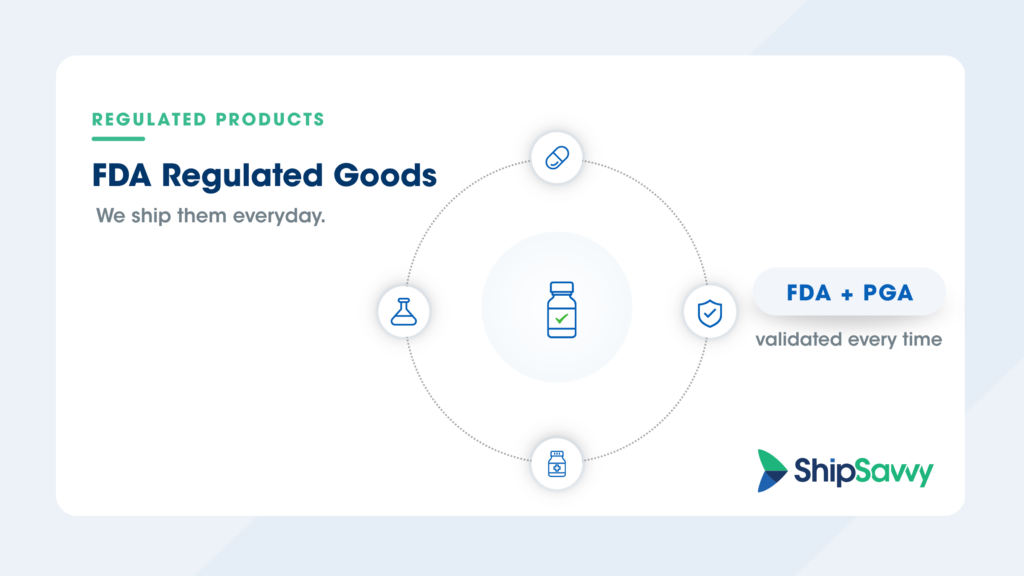
A Partner Government Agency, or PGA, is a part of the US government that cares about your product on top of customs. For supplements, food, and anything that goes in or on the body, that agency is usually the FDA, the Food and Drug Administration.
A PGA product must satisfy that agency’s data requirements on every clearance, not just standard customs.
Why Regulated Products Are Treated Differently
A supplement is different from a t shirt for one reason. Another government agency, usually the FDA, cares about what is in it and where it was made.
Most transportation companies will not touch regulated goods, and the reason is risk. A software platform just moves data back and forth, so it carries no real exposure.
A transportation company is different, because it has a truck sitting at the border with your product on it. If one field is wrong, that shipment gets turned back, which is a real cost, so most providers simply avoid regulated goods.
We built for it instead. That choice is the whole reason this lane is open to the sellers who ship with us.
Food, Skincare, and Cosmetics Are Regulated Too
Supplements get the attention, but the same rules cover a wider range of products than people expect. If it goes in or on the body, a Partner Government Agency usually has an interest in it.
That includes food and beverages, vitamins, skincare, and cosmetics. A face cream and a greens powder land in the same regulated bucket, even though they feel like very different businesses.
The practical upshot is the same across all of them. Build the product record once with the required data, and every future shipment of that item reuses it.
So if you have been holding back a skincare line or a snack brand for the same reason Maya held back her greens powder, the path is the same. One setup per product, then routine.
What the FDA Actually Wants From Your Product
The FDA asks for things customs alone never required. Exactly what is in the product, who made it, and the physical address of the plant where it was manufactured.
That manufacturer plant address is required on every single clearance. Not once at the start, but every time the product crosses the border.
All in, you are looking at something like four dozen separate pieces of information per product. Ingredients, intended use, facility details, classification codes, and more.
The first time a seller sees that list, they do what Maya did. They close the tab.
But that list is not a recurring chore. It is a profile you build one time, which is the part nobody explains.
The Reframe: It Is a One Time Setup, Not a Forever Job
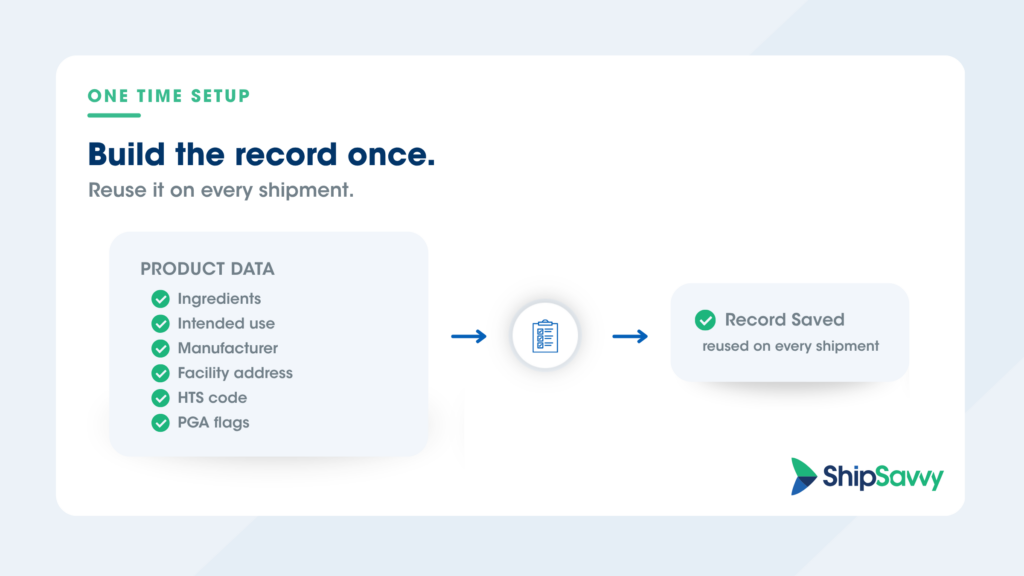
Here is the part that changes everything. That giant pile of information is a one time setup, built once per product.
Once your product is in the system with its ingredients, manufacturer, facility, and codes all validated, that record gets reused. Your second shipment does not start over, and neither does your hundredth.
So the work is not that every order is a nightmare. The work is that the first order takes some setup, and then it is normal.
Think of it like onboarding a new product into your accounting system. A bit of work once, and invisible after that.
The mental shift is from per order dread to per product effort. You are not signing up for a fight on every shipment, you are filling out one good profile and reusing it.
And you do not do most of it alone, which is the next piece.
What the One Time Setup Actually Includes
People hear four dozen fields and picture endless forms. In practice the information falls into a few clear buckets, and most of it you already know about your own product.
Product details.
The ingredients, the intended use, and what the product actually is.
Manufacturer and facility.
Who makes it and the physical plant address, which the FDA wants on every clearance.
Classification codes.
The HTS code that tells customs what your item is, plus any PGA flags that apply.
Compliance data.
The specific FDA and PGA fields for your category, validated before anything ships.
You gather this once, we validate it, and it becomes the product’s permanent record. Every future shipment of that item pulls straight from it.
Your First Shipment, Then Every One After
Here is what the difference looks like in practice. On your first shipment of a product, you build the record, we validate the fields, and the clearance carries that full profile.
On every shipment after that, the record is already there. The product pulls its ingredients, manufacturer, facility, and codes automatically, so the clearance is quick and routine.
That is the whole promise in one line. The first order of each product takes setup, and the next thousand do not.
It also means adding a new product later is not starting from scratch. You repeat the one time setup for that single item, and your existing products keep clearing exactly as before.
Why the Regulated Opportunity Is Wide Open Right Now
When the rules tightened, a lot of shippers looked at FDA products, saw that setup, and walked away. They simply stopped accepting them.
That sounds like bad news, but it is actually your opening. If your competitors got scared off, the US market share they were fighting for is suddenly easier to win.
The sellers winning regulated categories right now are not the biggest. They are the ones willing to do the one time work that everyone else avoided.
And this is not a small niche. Food, supplements, and personal care are some of the busiest ecommerce categories, which means the customers your competitors abandoned are real volume, not scraps.
That can be you. The barrier that scared you is the same barrier keeping your competition out.
How SavvyBroker Handles the Setup
Here is how you actually do the one time setup without becoming an FDA expert. This is where SavvyBroker comes in, built for exactly this kind of product.
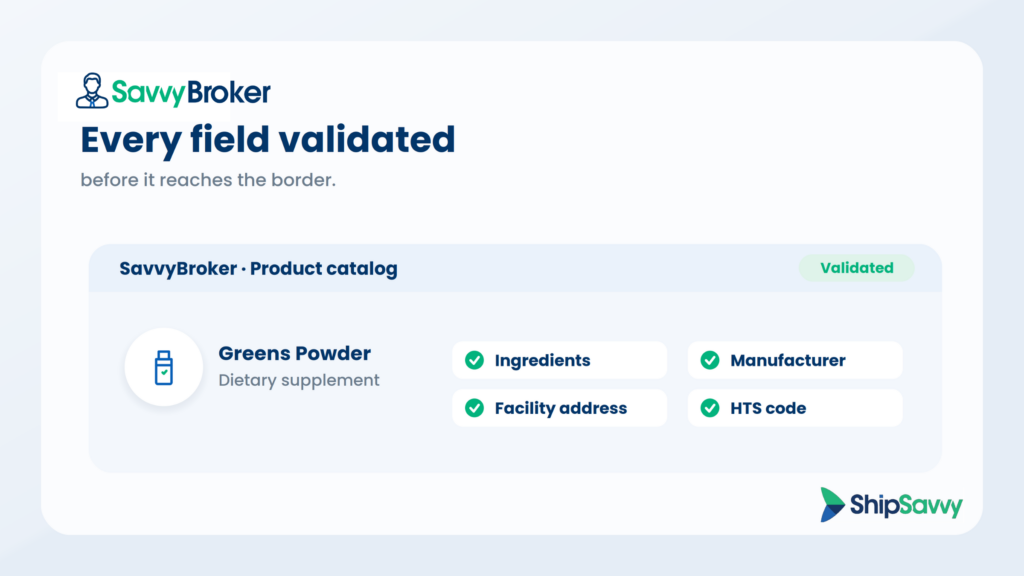
You build your product catalog once and upload it. The ingredients, the manufacturer details, the facility addresses, and the classification all live in one place.
Then we run the FDA and PGA validation on it. That just means we check that every required field is correct before your shipment ever reaches the border, so it does not get held.
We manage the broker process for you, and we do it every day, so we are not learning on your shipment. After that, your job is simple, you sell, and every future shipment pulls from the record.
You never become the customs person. We carry that load.
We move more than two million packages a year and are one of the few providers that handles FDA goods every day. Regulated shipments are routine for us, not an exception we are nervous about.
Amazon’s Supplement Policy Is a Separate Step
It is worth separating two things sellers often blur together. There is what the US government requires to import your product, and there is what Amazon requires to list it.
The FDA and PGA data we have been talking about is the import side, the part that gets your product across the border. Amazon has its own supplement category requirements, often called ungating, which is about being allowed to sell the product on the marketplace at all.
Those are different gates, handled in different places. We handle the import and clearance side, while the Amazon listing and ungating side lives in your Seller Central account.
The good news is that the documentation overlaps. The ingredients, manufacturer, and paperwork you organize for clearance is the same kind of information Amazon tends to ask for, so doing the work once makes both gates easier.
Frequently Asked Questions
Do you need FDA approval to sell supplements in the US?
The FDA does not pre approve most dietary supplements, but it does require specific data on every import, including ingredients, intended use, and the manufacturer’s facility address. ShipSavvy validates those fields before your shipment reaches the border so it clears cleanly.
Can Canadian brands sell supplements on Amazon in the US?
Yes. Canadian brands can sell supplements, food, skincare, and cosmetics into the US market. The products are regulated, which means extra data per product, but the setup is finite and reusable.
What does the FDA require to import supplements?
Roughly four dozen pieces of information per product, including ingredients, intended use, classification codes, and the physical address of the plant where it was made. That manufacturer plant address is required on every clearance, not just the first one.
Is FDA compliance a one time setup?
Largely, yes. You build each product’s record once, with its ingredients, manufacturer, facility, and codes validated, and every future shipment of that product reuses it.
Why do most shippers avoid FDA products?
Because a transportation company has product physically sitting at the border, and a single wrong field can get a shipment turned back. That real cost leads most providers to avoid regulated goods, which is exactly why the US market is open to sellers who handle them.
Put Your Products on the US Market
Here is how I think about it. You could go learn FDA import rules, PGA requirements, facility registration, and classification codes yourself, and spend the next few months becoming a part time compliance officer.
Or you could keep formulating, keep selling, and let us set the system up with you. That is the whole point of ShipSavvy.
The brands winning regulated categories are not the ones who became FDA experts. They are the ones who did the one time setup and then got back to building their product.
Because this has a few moving parts specific to your products, the best next step is a quick call. We will map your setup product by product and stay with you through the first few shipments.
- Book a call at shipsavvy.com/book-a-demo
- Prefer to start on your own? Create a free account at shipsavvy.com